
Main Courses
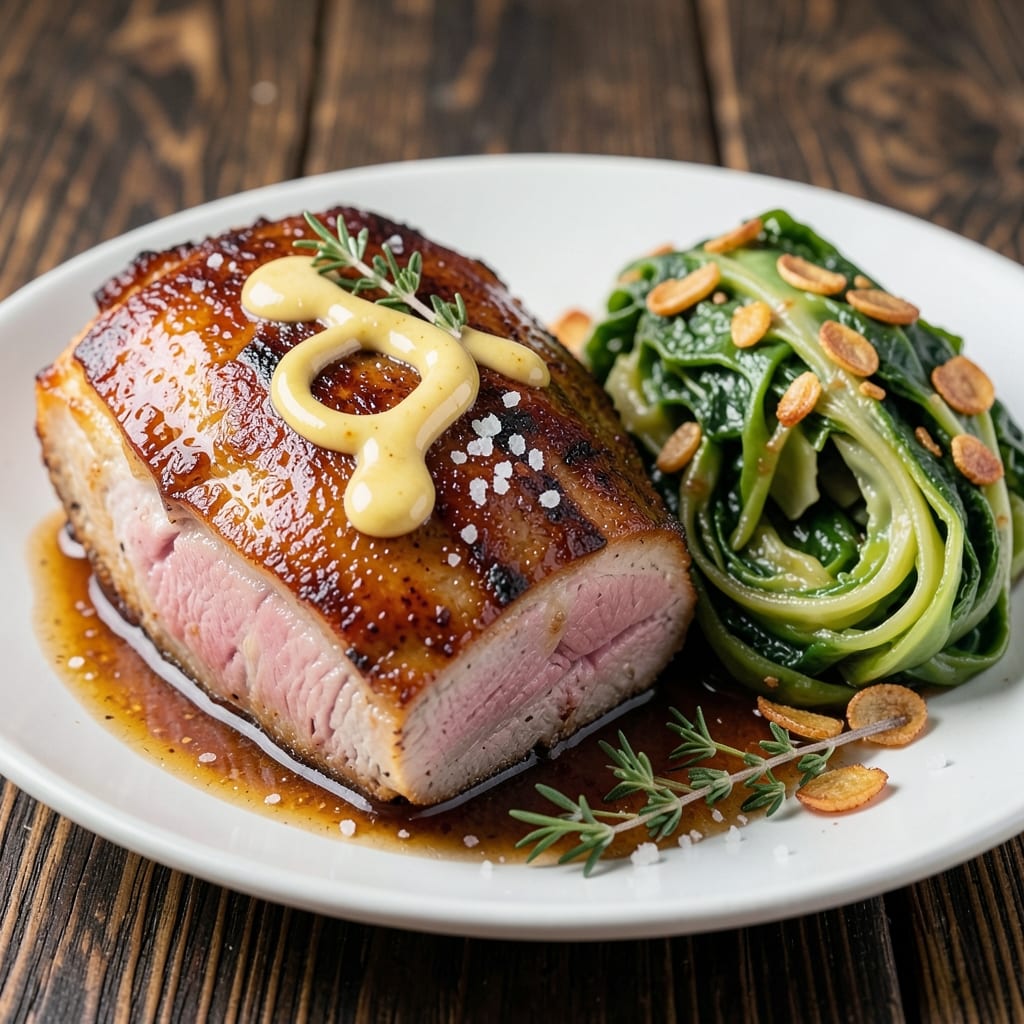
This apple cider pork roast with cabbage transforms a simple Sunday dinner into a restaurant-worthy centerpiece. The secret lies in slow-braising the pork until it's fork-tender, then finishing it with a glossy apple-cider glaze that balances sweet and tangy notes. I first perfected this technique during a Charleston winter when I needed to feed a crowd without sacrificing flavor or ease—it became an instant favorite. What sets this recipe apart is the harmony between the rich, caramelized pork and the crisp-tender cabbage, both bathed in that aromatic cider reduction. The pork shoulder breaks down beautifully with just 3 hours of low-and-slow cooking, while the cabbage absorbs the glaze's flavors without turning mushy. This is comfort food at its finest—substantial enough for a family meal but impressive enough for guests. By the time you serve this dish, you'll have golden-brown pork with crisp edges and tender centers, topped with a glossy glaze that clings beautifully. The cabbage adds a satisfying crunch and bright acidity to cut through the richness. The aroma alone will have everyone gathering around the table, and each bite delivers that perfect balance of sweet, savory, and tangy. This recipe works equally well for holiday gatherings or weeknight dinners. The leftovers reheat beautifully, making it perfect for meal prep or feeding a crowd. Let's get to the step-by-step instructions—where the real magic happens in the oven.
Ingredients for apple cider pork roast with cabbage
Eight ingredients transform simple pork and cabbage into a showstopping centerpiece.
| Ingredient | Amount | Notes |
|---|---|---|
| Boneless Pork Shoulder 🥩 | 4 lb | Well-marbled for tenderness |
| Green Cabbage 🥬 | 1 whole | Heads cut into wedges |
| Unsalted Butter 🧈 | ½ cup | Cold, cubed for browning |
| Apple Cider 🍎 | 2 cups | Unfiltered for depth of flavor |
| Brown Sugar 🍚 | ½ cup | Packed for accurate measure |
| Dijon Mustard 🍯 | 1 tbsp | For glaze complexity |
| Fresh Thyme 🌿 | ¼ cup | Stems removed, loosely packed |
| Fresh Rosemary 🌿 | ¼ cup | Needles only, loosely packed |
| Garlic Cloves 🧄 | 6 cloves | Peeled, smashed for aroma |
| Yellow Onion 🧅 | 1 whole | Quartered, skin on |
| Kosher Salt 🧂 | 1 ½ tbsp | Diamond Crystal preferred |
| Black Peppercorns 🌶️ | 1 tsp | Freshly cracked |
| Olive Oil 🫒 | 2 tbsp | For cabbage tossing |
The pork shoulder is the star—look for well-marbled cuts with good fat distribution. Costco and Whole Foods carry excellent options, but any butcher will trim it for you if you ask. Fresh thyme and rosemary should smell vibrant, not dusty—Trader Joe's has great bundles for this. The apple cider matters too: unfiltered brands like Woodchuck or Angry Orchard add depth. For the cabbage, green is ideal but red works too—just avoid wilted outer leaves. The brown sugar? Domino brand is reliable for consistent packing, but any light brown sugar will do.
No fresh thyme? Dried at half the amount works in a pinch, but fresh is worth hunting down. Substitute rosemary with fresh sage if needed—similar earthy notes. Running low on apple cider? Apple juice plus 1 tsp lemon juice mimics the tang. The Dijon mustard can be swapped for whole-grain mustard, though it'll be slightly less smooth. For the cabbage, if you prefer shaved over wedges, slice it thinly and toss with olive oil before roasting. The garlic cloves can be roasted whole with the cabbage for extra flavor infusion—just smash them after.
This roast reheats beautifully—350°F for 20 minutes restores moisture. The cabbage stays crisp if reheated separately. Store pork in its glaze for 4 days in the fridge or freeze for 3 months. Cabbage keeps 1 week in a sealed container. I always double the glaze—half goes on the pork, half gets tossed with the cabbage. The leftovers make amazing sandwiches the next day.
Why You'll Love This Recipe
- I swear by this trick: just quarter the cabbage and leave the core on—it roasts perfectly without fuss. The pork shoulder? One thick slice of butter and a sprinkle of brown sugar, then it’s hands-off in the oven.
- Minimal Chopping Required: I swear by this trick: just quarter the cabbage and leave the core on—it roasts perfectly without fuss. The pork shoulder? One thick slice of butter and a sprinkle of brown sugar, then it’s hands-off in the oven.
- Sweet-Savory Magic: That apple cider glaze caramelizes into something ridiculously good—tender pork with a sticky, tangy crust, while the cabbage gets just crisp enough to hold its shape. Honestly, it’s the kind of flavor combo that makes you want to eat it straight from the pan.
- Weeknight to Holiday: Between us, this is my go-to for busy nights and Thanksgiving leftovers. The roast stays juicy for days, and the cabbage reheats beautifully—so you’re covered whether it’s Tuesday or a dinner party.
Step-by-step instructions for apple cider pork roast with cabbage
Here's how to transform simple ingredients into a deeply flavorful, slow-braised pork shoulder with caramelized cabbage.
Sear the Pork Shoulder for Maximum Flavor
Pat the 4 lb boneless pork shoulder completely dry with paper towels—this is crucial for achieving crispy bark later. In a heavy Dutch oven, melt the 0.5 cup unsalted butter over medium-high heat until foaming. Add the pork shoulder and sear on all sides for 8-10 minutes total, pressing down gently during the first minute to prevent curling. You want deep golden-brown coloration, not just light browning.
While the pork sears, prepare your aromatics: In a small bowl, combine the 1.5 tbsp kosher salt, 1 tsp freshly cracked black peppercorns, 6 smashed garlic cloves, 0.25 cup fresh thyme, and 0.25 cup fresh rosemary. Once the pork is browned, remove it from the pot and set aside on a plate. This searing step builds the flavor foundation—don't skip it.
Build the Herb-Rich Braising Liquid
In the same Dutch oven, add the 1 whole yellow onion (quartered with skin on) and cook for 5 minutes until softened and lightly caramelized. Pour in the 2 cups apple cider and scrape up all the browned bits from the bottom with a wooden spoon—this releases maximum flavor. Return the pork to the pot, fat-side up, then add the 0.5 cup packed brown sugar and 1 tbsp Dijon mustard. Stir to combine.
Bring the liquid to a gentle simmer, then cover tightly with a lid. Here's the thing—you want the pork to cook slowly, so reduce heat to low (about 300°F). The liquid should barely bubble at the edges. This low-and-slow approach ensures tender, fork-tender meat rather than tough, stringy pork.
Braise Until Fork-Tender (The Patience Phase)
Transfer the Dutch oven to a 325°F oven and braise for 3-3.5 hours, checking occasionally to ensure there's always liquid in the pot. If it gets too low, add ½ cup water or apple cider. The pork is done when it reaches 203°F internal temperature and a fork slides in like butter with no resistance. This is where the magic happens—the pork transforms from tough to melt-in-your-mouth tender.
About 30 minutes before the pork is done, prepare the cabbage: Cut the 1 whole green cabbage into wedges (leave the core intact) and toss with 2 tbsp olive oil, 1 tsp kosher salt, and ½ tsp black peppercorns. Roast on a separate baking sheet at 400°F until the edges are crispy-tender, about 25-30 minutes. The cabbage should be caramelized at the edges but still slightly crisp in the center.
Finish with Apple-Cider Glaze
Once the pork reaches 203°F, remove it from the pot and tent loosely with foil. Let it rest for 20 minutes—this is non-negotiable for juicy meat. Skim excess fat from the braising liquid (if desired) and place the pot over medium-high heat. Simmer the liquid uncovered for 10-15 minutes until reduced by about ⅓, thickening into a glossy glaze. The aroma should be rich and concentrated—this is your signal it's ready.
Slice the pork shoulder against the grain into ½-inch thick slices. Spoon the reduced apple-cider glaze over the slices and serve family-style with the crispy cabbage wedges. The contrast of tender pork, caramelized cabbage, and sweet-tangy glaze makes every bite unforgettable.
Pro Tips For Making Apple Cider Pork Roast With Cabbage
- SEAR THE PORK FIRST: Don’t skip the initial browning—get that pork shoulder screaming hot in a dry skillet for 3-4 minutes per side before adding liquid. I learned this the hard way when my cider-braised pork turned out pale and bland. The crust locks in flavor and keeps the meat from falling apart later.
- SHRED THE CABBAGE RIGHT: Cut the cabbage into uneven wedges (no need to core it) and slice the outer leaves into wide strips—this cooks faster and holds its shape better. I used to shred it too finely, and it turned into mush. Leave the tough core in unless you’re feeling ambitious with a knife.
- DON’T BOIL THE CIDER: Simmer the apple cider on medium-low heat—if it’s bubbling hard, the pork will stew instead of braise, and the cabbage will get soggy. After the first 30 minutes, reduce to a gentle simmer (tiny bubbles, occasional skimming). Trust me, rushing this step ruins the tender texture.
- SAVE TIME WITH COLD CIDER: Start with cold apple cider in the pan—it chills the pork slightly after searing, preventing a sudden temperature spike that can make the meat tough. I was skeptical until I tried it, and now I never go back. Just add it after browning and bring to a simmer.
Essential equipment for perfect results
Dutch Oven Essentials
Your Dutch oven is the workhorse of this recipe—look for a 6-7 quart model with a tight-fitting lid. I swear by the Lodge 6.5 Qt Dutch Oven—it retains heat beautifully and has that perfect cast iron flavor. If you're on a budget, the Le Creuset Stoneware Dutch Oven is a great alternative, though it's heavier. For even heat distribution, preheat your Dutch oven in the oven at 350°F for 15 minutes before searing the pork. This ensures a deep, even sear every time. 🔥
Meat Thermometer
A meat thermometer is non-negotiable for this recipe. I use the ThermoWorks Smoke because it's precise and has a long probe that fits perfectly in the pork shoulder. Insert the probe into the thickest part of the meat, avoiding fat pockets. The pork is done at 203°F internal temperature, but the thermometer helps you avoid overcooking. For braising, I also recommend a clip-on oven thermometer like the Meater to monitor oven temperature—it should stay within 5°F of your target. 🌡️
Butcher's Knife
For slicing the pork shoulder against the grain, invest in a sharp butcher's knife. My go-to is the Victorinox 8-inch Butcher's Knife—it's durable and stays sharp with proper care. A honing steel and whetstone are essential for maintaining that edge. Slice the pork at a 45-degree angle against the grain for maximum tenderness. If you don't have a butcher's knife, a high-quality chef's knife like the Shun Premier will work, but it requires more precision. 🔪
Cabbage Mandoline
While you can cut cabbage wedges by hand, a mandoline makes quick work of it for larger batches. The OXO Good Grips Mandoline is my favorite—it's safe and has adjustable thickness settings. For wedges, set it to ¼-inch thick and slice carefully, keeping the core intact. If you prefer shaved cabbage, use the mandoline's julienne attachment. A sharp knife works too, but it takes more time and patience. 🥬
Mixing Bowls
Use a large mixing bowl (at least 8-quart capacity) for tossing the cabbage with olive oil and seasonings. I prefer stainless steel bowls like the OXO Good Grips line—they're durable and easy to clean. For the herb mixture (thyme, rosemary, garlic, etc.), a smaller bowl (about 3-quart) works perfectly. Avoid plastic bowls for high-heat ingredients—they can warp or retain flavors. 🥣
Tongs for Serving
Serve the pork and cabbage with long-handled tongs for easy family-style plating. The OXO Good Grips Tongs are my top pick—they're comfortable to use and have a secure grip. For the cabbage, I like to serve it directly from the roasting pan with a spatula. If you're serving a crowd, consider a large serving spoon for the glaze. These tools make plating effortless and keep everyone's hands out of the food. 🍽️
Nutrition facts
Frequently asked questions
Can I use pork loin instead of pork shoulder?
Pork loin is leaner and cooks much faster than pork shoulder, so it won't give you the same tender, fork-tender results. For this recipe, you need the connective tissue in pork shoulder that breaks down during braising. If you must use loin, reduce cooking time to 1.5-2 hours and keep it at 350°F—but expect a different texture.
What if I don't have a Dutch oven?
A heavy oven-safe pot with a tight lid works perfectly—just avoid thin aluminum. If your pot isn't oven-safe, finish the braising on the stovetop over low heat and check liquid levels frequently. The key is maintaining gentle heat to tenderize the pork.
Can I make this in a slow cooker?
Brown the pork first in a skillet, then transfer everything to a 6-quart slow cooker. Cook on Low for 8 hours or High for 5-6 hours. The cabbage should be added during the last 30 minutes on High to prevent overcooking. The glaze will be thinner but still delicious.
How do I prevent the cabbage from turning mushy?
Roast the cabbage wedges at 400°F for just 25-30 minutes—they should be tender but still hold their shape. Avoid overcrowding the pan, and leave the core intact to maintain structure. For extra crispness, finish with a quick broil for 2-3 minutes before serving.
Can I prep this ahead of time?
Yes! The pork can be fully braised and refrigerated for 4 days or frozen for 3 months. Reheat in a 350°F oven for 20 minutes with a splash of apple cider. The cabbage is best roasted fresh, but you can prep wedges 1 day ahead and store them in the fridge—just roast from cold when ready.