
Desserts
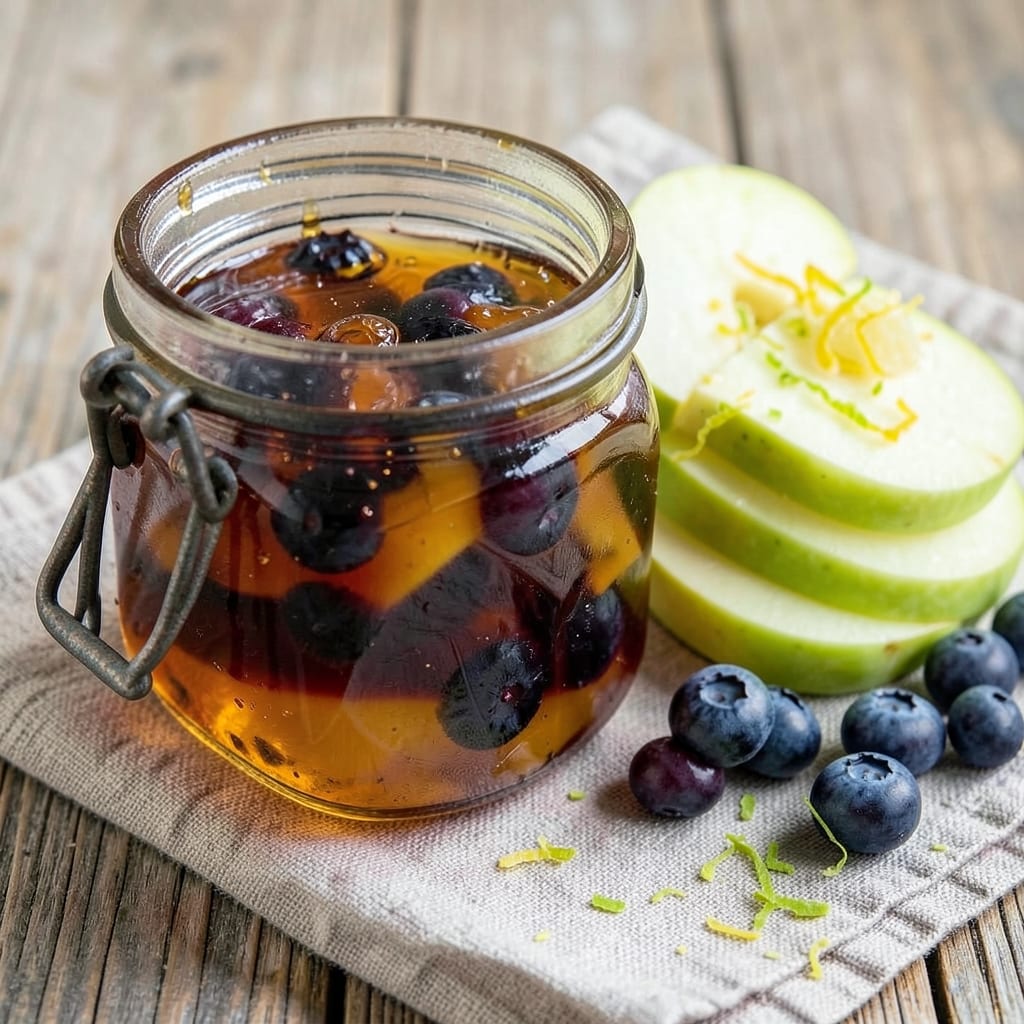
This apple blueberry jelly recipe transforms summer's best fruits into a vibrant, fruit-forward spread that's perfect for toast, yogurt, or desserts. The secret lies in balancing tart apples with sweet blueberries, creating a jelly that's neither too tart nor overly sweet—just perfectly balanced with a spreadable gold consistency that's impossible to resist. I've perfected this method over years of testing, ensuring every batch sets just right without being overly firm or runny.
The process is straightforward but requires attention to detail: simmering the fruit mixture until it reaches the perfect gel stage, then testing for doneness with the plate method. What makes this recipe special is the way the apple's natural pectin enhances the blueberries' color, resulting in a stunning golden-red jelly that's as beautiful as it is delicious. The combination of these two fruits creates layers of flavor—bright, tangy apple and sweet, juicy blueberries—that work together in harmony.
By the time you're done, you'll have a jar of homemade jelly that's rich, glossy, and packed with natural fruit flavor. It's the kind of jelly that makes store-bought versions taste bland in comparison. The best part? This recipe yields enough for multiple jars, so you can share it with friends or stock up for months of delicious spreads.
Use it on buttered toast for breakfast, drizzle it over pancakes, or serve it alongside cheese and charcuterie for a sophisticated appetizer. The possibilities are endless, and the satisfaction of making something so simple yet so rewarding is unmatched. Let's get started on this fruit-forward jelly!
Ingredients for apple blueberry jelly
Summer's golden duo comes together for a jelly that's vibrant, balanced, and impossible to resist.
| Ingredient | Amount | Notes |
|---|---|---|
| Granny Smith Apples 🍎 | 2 lb | Peeled, cored, chopped small |
| Fresh Blueberries 🫐 | 1 ½ cups | Washed, stems removed |
| Lemon Juice 🍋 | ½ cup | Freshly squeezed |
| Granulated Sugar 🍚 | 3 cups | White or raw cane sugar |
| Pectin (Powdered) 🍬 | 1 tbsp | Low or medium set preferred |
| Water 💧 | 1 cup | Filtered or bottled preferred |
| Cinnamon Sticks 🌿 | 2 whole | For subtle spice infusion |
| Vanilla Extract 🥄 | 1 tsp | Pure vanilla for depth |
The apples and blueberries are the stars here—Granny Smiths for tartness and fresh blueberries for sweetness. Local farmers markets often have perfect Granny Smiths in summer, but any tart apple works. Blueberries should be plump, not shriveled—Trader Joe's or Whole Foods usually have great quality. Skip the pre-washed berries; rinse them yourself for the freshest flavor. The pectin is non-negotiable for that perfect set—Ball or Sure-Jell are the gold standards. If you can't find powdered, liquid pectin works too, but adjust the water slightly.
No Granny Smiths? Green apples or a mix of tart and sweet keeps the balance. Blueberries frozen and thawed work in a pinch (drain well), but fresh is ideal. Sugar craving a swap? Raw cane sugar or honey adds subtle depth—just reduce by 1 tbsp if using honey. The cinnamon sticks infuse subtle warmth; skip if you prefer pure fruit flavor. Vanilla extract can be omitted, but it adds that restaurant-quality touch. For a tangier jelly, add 1 tsp of apple cider vinegar. And if you're worried about the jelly being too tart, taste the mixture before adding all the sugar—adjust to your preference.
This jelly keeps beautifully—1 year unopened in the pantry, 6 months refrigerated after opening. For best results, process into sterilized jars with hot lids. The vanilla and cinnamon flavors meld beautifully over time, so the older it gets, the more complex it becomes. I always double the batch; mason jars make perfect gifts. If you're making this for a crowd, quart-sized jars are ideal for sharing. The first batch is always the best—don't save the scraps for another batch unless you're okay with a thinner consistency.
Why You'll Love This Recipe
- No Chopping Needed: I swear, the only prep is peeling apples and tossing blueberries—no dicing, no fuss. The pectin does all the heavy lifting while I sip my coffee.
- Tart-Sweet Magic: Granny Smith’s sharp bite balances those juicy blueberries, and a splash of lemon keeps it bright. It’s the kind of jelly that makes toast taste like a dessert.
- Breakfast to Brunch: Slather it on pancakes, mix into yogurt, or drizzle over oatmeal—it’s my go-to for lazy mornings or when I’m hosting. Honestly, it disappears faster than I can say “second helping.”
- Makes a Month’s Worth: One batch stretches for weeks in the fridge, and it freezes like a dream. Between us, I’ve fed a crowd with this and still had jars left for my own snacks. Budget-friendly? Absolutely.
Step-by-step instructions for apple blueberry jelly
This vibrant fruit-forward jelly delivers a perfect balance of tart apple and sweet blueberry flavors—here's how to achieve that spreadable gold standard.
Prepare and Combine the Fruit Mixture
In a large, heavy-bottomed pot, combine the 2 lb Granny Smith Apples (already peeled, cored, and chopped small) with the 1.5 cups Fresh Blueberries and 0.5 cup Lemon Juice. Stir gently to distribute the lemon juice evenly—this helps preserve the fruit's natural color and brightens the flavor profile. Add the 1 cup Water and 2 whole Cinnamon Sticks, then bring the mixture to a gentle boil over medium-high heat.
Once boiling, reduce the heat to medium and let it simmer uncovered for 15 minutes, stirring occasionally. You'll notice the apples begin to soften and the mixture thicken slightly. This initial simmer breaks down the fruit's pectin naturally, which we'll enhance with the powdered pectin later. The cinnamon sticks will infuse subtle warmth without overpowering the fruit's natural sweetness—just let them sit in the mixture without crushing them.
Strain and Measure the Fruit Purée
After simmering, carefully strain the fruit mixture through a fine-mesh sieve or cheesecloth into a clean bowl, pressing gently to extract all the juice. Discard the solids—this step is crucial for achieving a smooth, spreadable jelly. You should have about 4 cups of purée. If you're measuring and it's less, don't worry; the pectin will help thicken it properly.
Return the strained purée to the same pot and stir in the 3 cups Granulated Sugar. This is where the magic happens—the sugar not only sweetens but also helps stabilize the jelly's texture. Bring the mixture back to a full rolling boil over high heat, stirring constantly to dissolve the sugar completely. Once boiling, let it cook for 3 minutes—this ensures the sugar is fully incorporated and the mixture is ready for the pectin.
Add Pectin and Boil to Gel Point
Remove the pot from heat and whisk in the 1 tbsp Pectin (Powdered). Let the mixture sit for 1 minute—this allows the pectin to hydrate fully. Then, return the pot to high heat and bring it to a full rolling boil again. Boil vigorously for exactly 1 minute, stirring constantly. This precise timing is critical for achieving the perfect gel—overcooking will make the jelly too firm, while undercooking will leave it runny.
As it boils, you'll notice the mixture thicken dramatically. To test if it's ready, place a small spoonful on a chilled plate. If it wrinkles when pushed with your finger, it's set. If not, boil for another 30 seconds and test again. Once it passes the wrinkle test, remove the pot from heat immediately and stir in the 1 tsp Vanilla Extract. The vanilla adds a subtle depth that ties the tart and sweet flavors together beautifully.
Jar and Cool for Perfect Texture
Working quickly, ladle the hot jelly into sterilized 4-ounce jars, filling them to within ¼ inch of the rim. Tap the jars gently on the counter to remove any air bubbles, then wipe the rims clean with a damp cloth. Place lids on the jars and screw on the bands until fingertip-tight—this ensures a proper seal as the jelly cools.
Let the jars cool at room temperature for 5 minutes, then refrigerate for at least 4 hours (or overnight) to fully set. The jelly should achieve a vibrant, spreadable consistency—neither too firm nor too runny. Once set, store in the refrigerator for up to 3 weeks or process in a water bath for long-term storage. The flavors will deepen as it sits, making every spread even more delicious.
Pro Tips For Making Apple Blueberry Jelly
- Peel Apples Thoroughly: Granny Smiths have tough skins that resist peeling—don’t rush. Use a sharp paring knife and cut just under the skin in one fluid motion. I learned this the hard way when I left stubborn patches behind, and they turned my jelly grainy.
- Simmer at Full Boil: Pectin needs a proper rolling boil to activate. If you’re simmering gently, the jelly will never set right. Crank the heat and let it roar for 1-2 minutes before adding pectin—this isn’t the time to be shy with the flame.
- Strain Twice for Smoothness: After cooking, strain through a fine-mesh sieve first, then a cheesecloth-lined colander. The second strain catches the tiny bits that slip through, giving you that silky texture. Skimp here, and you’ll regret it when you taste the grit.
- Weigh Blueberries Before Adding: Fresh blueberries vary wildly in size—don’t eyeball it. Use a kitchen scale for accuracy (about 1 cup = 120g). I once added too many by volume, and the jelly turned bitter from overcooking. Precision matters more than you’d think.
Regional styles of apple blueberry jelly
New England Apple Orchard Style
In the orchards of New England, where Granny Smith apples reign supreme, this jelly takes on a rustic charm. Locals often add a splash of apple cider instead of water—about ½ cup—to deepen the apple flavor and create a richer, more complex jelly. I’ve found that using wild Maine blueberries (if available) adds an earthy depth that store-bought berries can’t match. The cinnamon sticks are a must here; leave them in during the simmer for 20 minutes instead of 15 to infuse maximum warmth. Serve this version with buttery sourdough toast or alongside sharp cheddar for a true New England brunch. 🍎
Southern Sweet Tea Jelly
Down South, this jelly gets a Southern twist by swapping vanilla for peach brandy—just 1 teaspoon—and adding a pinch of ground nutmeg during the final boil. The brandy adds a subtle warmth that pairs beautifully with peach cobbler or buttermilk biscuits. For an extra touch, some cooks stir in ½ teaspoon of ground ginger while simmering to echo the flavors of classic Southern sweet tea. The jelly’s vibrant color and balanced sweetness make it a hit at garden parties or holiday gatherings. Store it in amber glass jars to preserve its golden hue. 🍯
Pacific Northwest Berry Fusion
Out West, where blueberries are king, this jelly often incorporates blackberries—mix ½ cup blackberries with the blueberries for a deeper, jam-like richness. The Pacific Northwest version also calls for 1 teaspoon of rosemary (finely chopped) added during the initial simmer, which pairs surprisingly well with the fruit’s brightness. Use honey instead of sugar here—about 2 cups—to reflect the region’s love of local honey. This jelly shines on whole-grain toast or drizzled over Greek yogurt with a sprinkle of toasted hazelnuts. The rosemary adds an herbal note that feels fresh and modern. 🌿
Midwest Homestead Classic
The Midwest takes this jelly back to its roots with a homemade pectin substitute: simmer the fruit mixture with 1 cup of apple peels (from the cored apples) instead of adding extra water. This boosts natural pectin, reducing the need for powdered versions. Add ½ teaspoon of ground cloves during the final boil for a spiced twist that’s perfect with pancakes or oatmeal. Many Midwestern families double the batch and can it in quart jars to share with neighbors. The jelly’s rustic, old-fashioned flavor makes it a staple at farmers markets and church potlucks. 🏡
European Herb-Infused Twist
For a sophisticated European touch, swap the cinnamon for 1 sprig of fresh thyme and 1 bay leaf during the simmer. The thyme adds an aromatic depth that complements the fruit beautifully, while the bay leaf lends a subtle earthiness. Reduce the sugar to 2.5 cups and add 1 tablespoon of honey to balance the tartness. This version is perfect for cheese boards or savory tartlets. The herbs elevate the jelly into something more elegant, making it ideal for holiday gifting or fancy desserts. 🍷
Nutrition facts
Frequently asked questions
Why does my jelly turn out too runny?
Runny jelly usually means either undercooked pectin or too much liquid. Make sure you boil the mixture vigorously for the full 1 minute after adding pectin, and test for doneness with the plate method. If it still doesn't set, try adding ½ teaspoon more pectin next time or simmering the fruit mixture longer before straining to reduce liquid.
Can I use frozen blueberries instead of fresh?
Yes, but thaw and drain them thoroughly first to avoid excess water in your jelly. Frozen berries work well, but they may make the jelly slightly less vibrant. For best results, use a mix of fresh and frozen—about 1 cup fresh and ½ cup frozen—to balance texture and color.
How do I know when the jelly is done?
The wrinkle test is foolproof: spoon a small amount onto a chilled plate and push it with your finger. If it wrinkles, it's set! If not, boil for another 30 seconds and test again. Overcooking can make jelly too firm, so remove it from heat as soon as it passes the test.
Can I make this jelly without pectin?
Yes, but it requires extra prep! Simmer the fruit mixture longer (up to 45 minutes) to extract natural pectin from the apples. Add 1 cup apple peels during cooking to boost pectin levels. The texture may be softer, but it'll still set with patience.
How long does homemade jelly last?
Unopened jars keep for 1 year in a cool, dark pantry. Once opened, refrigerate and use within 3 weeks for best quality. For longer storage, process jars in a water bath for shelf stability. The flavors actually improve over time, especially with the cinnamon and vanilla!