
Main Courses
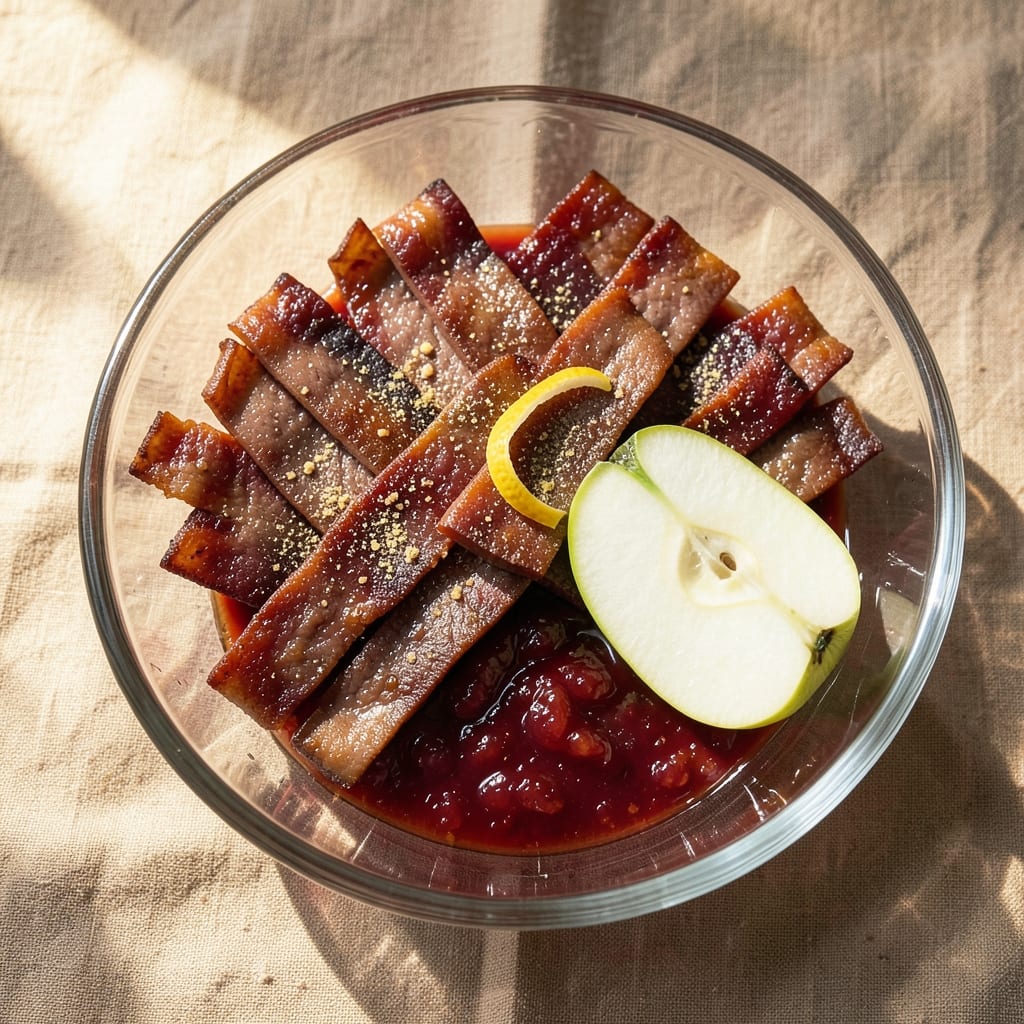
This apple beef jerky recipe transforms tough cuts into tender, smoky-sweet bites that dissolve on your tongue—no sugar crystals in sight. The secret lies in a marinade of apple cider vinegar and apple juice, which tenderizes the meat while infusing it with natural sweetness and depth. After slicing beef paper-thin and marinating for 12 hours, the dehydrator (or oven) works its magic, creating jerky with a perfect balance of chew and flavor.
What sets this recipe apart is the absence of added sugars or preservatives—just high-quality beef, apple-based marinade, and a touch of liquid smoke for that authentic campfire taste. The process is straightforward but requires patience: thin slicing ensures even drying, while proper dehydration times guarantee safety without sacrificing texture. No special equipment? A well-ventilated oven works just as well.
By the time you’re done, you’ll have jerky that’s rich, slightly tangy, and packed with apple’s natural sweetness—ideal for snacking, camping trips, or gifting. The marinade’s acidity tenderizes the meat while preventing sugar crystals from forming on the surface, leaving you with jerky that’s as delicious as it is professional. Let’s get started on making this crowd-pleaser.
This recipe isn’t just about flavor—it’s about control. You’ll learn how to slice beef correctly, monitor dehydration times for food safety, and customize the marinade to suit your taste. Whether you’re a jerky novice or a seasoned pro, the results will be worth the effort. Ready to make jerky that stands out?
Ingredients for apple beef jerky
Four pounds of beef and a few pantry staples—this jerky tastes like fall in every bite.
| Ingredient | Amount | Notes |
|---|---|---|
| Top-Round Roast Beef 🥩 | 2 lb | Tough cut, grain removed |
| Apple Cider Vinegar 🍎 | 1 cup | Raw, unfiltered preferred |
| Apple Juice 🍏 | 1 cup | Unsweetened, no additives |
| Liquid Smoke 🔥 | 1 tbsp | Hickory or applewood flavor |
| Worcestershire Sauce 🍶 | 1 tbsp | Vegan if needed |
| Garlic Powder 🧄 | 1 tbsp | Freshly ground preferred |
| Onion Powder 🧅 | 1 tbsp | Not onion salt |
| Salt 🧂 | 1 ½ tbsp | Kosher or sea salt |
| Black Pepper 🌶️ | 1 tsp | Freshly ground preferred |
| Ground Mustard 🌿 | 1 tsp | Yellow or Dijon |
| Cayenne Pepper 🔥 | ½ tsp | Adjust for heat preference |
| Lemon Juice 🍋 | 1 tbsp | Freshly squeezed |
The beef is everything here. Top-round roast is the gold standard—lean but not dry, with just enough fat to stay tender. Grab a 1.5-2 lb package from the butcher section (not the pre-sliced deli counter stuff). Ask for it to be vacuum-sealed if possible—keeps it fresher longer. If you're buying a whole roast, freeze it until ready to slice. The thinner the slices, the more even the drying. Aim for 1/8-inch thickness—use a meat slicer if you've got one, or a very sharp knife and steady hands. Costco or local butchers usually have it pre-cut if you're in a rush.
No apple cider vinegar? White vinegar or balsamic vinegar works in a pinch, but the apple flavor is key here. Skip the sweetened apple juice—unsweetened is non-negotiable for that clean, tangy taste. The Worcestershire sauce adds depth, but if you're avoiding soy, coconut aminos works too. For the liquid smoke, Smoky Mountain brand is the OG, but any quality brand will do. The mustard might seem odd, but it helps bind the marinade and adds a subtle tang. Want it milder? Cut the cayenne in half or swap for smoked paprika. Pro tip: Make extra marinade—it's perfect for grilled chicken or pork chops too.
Marinated beef keeps for 24 hours in the fridge before dehydrating—don't rush it. Once sliced, pat the meat dry with paper towels to help it dehydrate faster. For dehydrating, 135°F for 4-6 hours is ideal, but check after 3 hours. If using an oven, prop the door open with a wooden spoon and bake at 175°F for 2-3 hours. Store finished jerky in an airtight container with parchment paper between layers—good for 2 weeks refrigerated or 1 month frozen. The flavor actually improves after a few days as the meat absorbs more marinade.
Why You'll Love This Recipe
- No-Fuss Prep: I swear, this takes less effort than ordering takeout. Slice the beef thin, toss it in the marinade—apple cider vinegar and apple juice do the heavy lifting—and let the fridge work while you scroll through your phone. No fancy tools, no stress.
- Smoky-Sweet Magic: That liquid smoke and Worcestershire? It’s like a campfire in your mouth, but with a tangy twist from the apple. The jerky comes out chewy, slightly sweet, and packed with a depth that makes store-bought taste like cardboard.
- Snack Attack Ready: Honestly, I keep a bag in my car, my desk, and my gym bag. It’s perfect for when hunger hits but you’re not near a kitchen—no reheating, no mess. And the kids? They think it’s “cool jerky” because it’s not the dry, salty stuff they’re used to.
- Budget Stretch: Top-round roast is affordable, and this marinade turns a small cut into a mountain of jerky. I’ve made enough for a week’s snacks with just one roast—leftovers? None. It disappears too fast. Plus, the apple juice keeps it from tasting like plain jerky. Win.
Step-by-step instructions for apple beef jerky
Here's how to transform tough top-round beef into tender, smoky-sweet jerky without sugar crystals.
Prepare and Slice the Beef
Start by removing all fat and silver skin from the 2 lb top-round roast beef using a sharp boning knife. This ensures even cooking and prevents greasy jerky. I like to work on a cutting board with a damp paper towel underneath to catch any stray bits.
Slice the beef against the grain into strips about ¼-inch thick and 2-3 inches long. You should end up with roughly 120-150 strips. For even drying, aim for uniform thickness—thicker pieces will stay chewy, while thinner ones dry too quickly. Place the strips in a large bowl and set aside.
Mix the Marinade
In a separate large bowl, combine the 1 cup apple cider vinegar, 1 cup apple juice, 1 tbsp liquid smoke, 1 tbsp Worcestershire sauce, 1 tbsp garlic powder, 1 tbsp onion powder, 1.5 tbsp salt, 1 tsp black pepper, 1 tsp ground mustard, 0.5 tsp cayenne pepper, and 1 tbsp lemon juice. Use a whisk to blend everything thoroughly until the powders dissolve completely.
The vinegar and apple juice create a tangy-sweet base while the liquid smoke and spices add that signature smoky depth. I always taste the marinade first—it should be bold and flavorful. If you prefer less heat, reduce the cayenne to ¼ tsp instead.
Marinate the Beef Overnight
Pour the marinade over the beef strips in the bowl, making sure every piece is fully coated. Cover the bowl with plastic wrap and refrigerate for at least 12 hours, but I prefer 24 hours for maximum flavor penetration. The acid in the vinegar will begin tenderizing the meat during this time.
After marinating, give the beef a quick stir to redistribute any settled spices. The strips should look glossy and infused with color. If you're short on time, you can marinate for just 6 hours, but the flavor won't be as deep. Drain the beef in a colander, reserving the marinade for later use.
Dry the Jerky
Preheat your dehydrator to 160°F. Arrange the beef strips in a single layer on the dehydrator trays, leaving about ½-inch space between each piece. This prevents them from sticking together during drying. For even drying, rotate the trays halfway through the process.
Dry for 4-6 hours until the jerky is completely dry to the touch but still pliable. It should snap when bent but not be brittle. If using an oven, set it to 175°F with the door slightly ajar for airflow, and dry for 3-4 hours. The key is patience—rushing leads to chewy jerky.
Test and Store
Let the jerky cool completely before testing. It should be firm but still flexible. If any pieces feel damp, return them to the dehydrator for another 30 minutes. The finished jerky should have a rich amber color and intense smoky-sweet aroma.
Store in an airtight container in the refrigerator for up to 2 weeks or freeze for up to 3 months. For best texture, eat within 1 week. This method guarantees tender, flavorful jerky without the sugar crystals that often cling to commercial versions.
Pro Tips For Making Apple Beef Jerky
- Slice Thin, Slice Even: I learned this the hard way—uneven slices mean uneven cooking. Grab a sharp knife and cut the top-round roast against the grain into strips about ⅛-inch thick (or thinner if you’re patient). Thick spots stay chewy; thin spots dry out. A meat slicer helps, but if you’re doing it by hand, take your time—this isn’t the step to rush.
- Marinate Overnight, Not Hours: The apple cider vinegar and Worcestershire sauce need time to break down the beef’s tough fibers. Dump everything in a bag, refrigerate for at least 12 hours, and up to 24 if you can. I used to skip this and wondered why my jerky tasted flat—turns out, the acid and enzymes work their magic when given room to breathe.
- Skip the Boiling Water Bath: I was skeptical until I tried it: cold-smoke or dehydrate directly after marinating. Dumping the beef into boiling water to "pre-cook" softens the edges and makes the jerky gummy. Instead, pat the slices dry, then either:
- Balance the Apple Flavor: Liquid smoke and apple juice can overpower if you’re not careful. Start with ½ teaspoon liquid smoke per cup of marinade, then taste-test before dehydrating. Too smoky? Reduce by a third. Too sweet? Cut the apple juice by ¼ cup and add a splash of vinegar to sharpen the flavor. The goal is a harmony, not a one-note jerky.
Flavor customization for this apple beef jerky
Sweet Heat Balance
Adjust the apple-to-spice ratio to suit your taste. For a fruit-forward profile, increase apple juice to 1.5 cups and reduce cayenne to ¼ tsp. Need more heat? Add ½ tsp smoked paprika and ¼ tsp chipotle powder—this creates a smoky-chili depth that pairs perfectly with the apple’s sweetness. I often test the marinade first to ensure the flavors harmonize before committing to the full batch. 🍎🔥
Herbal Infusions
Swap out ½ cup of apple juice for herbal teas like hibiscus or chamomile for a floral twist. Hibiscus adds a tart, cranberry-like note, while chamomile brings a mild, earthy sweetness. For a citrus kick, replace ¼ cup apple juice with fresh orange juice—the acidity brightens the marinade and cuts through the richness. Always strain the tea or juice to avoid sediment in your jerky. ✨
Umami Boosters
Deepening the umami profile transforms this jerky into a restaurant-quality snack. Add 1 tbsp soy sauce (or coconut aminos for vegan) and 1 tsp fish sauce to the marinade for a savory depth reminiscent of Asian-inspired flavors. For a Mediterranean touch, stir in 1 tsp dried oregano and ½ tsp sumac—this creates a bright, tangy contrast to the apple’s sweetness. Trust me, your taste buds will thank you. 🍶
Spiced Apple Variations
Want a winter-spiced version? Add ½ tsp cinnamon, ¼ tsp nutmeg, and ¼ tsp allspice to the marinade for a warm, cozy flavor profile. For a Mexican-inspired twist, include ½ tsp cumin and ¼ tsp coriander—this creates a earthy, slightly nutty undertone that pairs beautifully with the apple’s natural sweetness. Always toast whole spices briefly in a dry pan to intensify their aroma before grinding. 🌶️
Glaze Finishing
After dehydrating, brush the jerky with a honey-maple glaze (mix 2 tbsp honey, 1 tbsp maple syrup, and 1 tsp apple cider vinegar) for a sticky-sweet finish. For a savory glaze, use 1 tbsp Dijon mustard and 1 tbsp apple juice—this adds a tangy, creamy contrast. Let the glaze set for 10 minutes before storing to avoid sogginess. This step elevates the jerky from great to showstopping. 💫
Regional Twists
For a Southern-style jerky, add 1 tsp brown sugar (optional) and ½ tsp black pepper—this mimics classic BBQ flavors. A Pacific Northwest version swaps apple for pear juice and adds ½ tsp rosemary for a herbal, woodsy note. If you’re near an apple orchard, try fresh apple cider instead of juice—it adds a fresh, crisp quality that’s hard to beat. Each regional tweak keeps the jerky uniquely yours. 🗺️
Nutrition facts
Frequently asked questions
Can I use a different cut of beef for this recipe?
Top-round roast is ideal because of its lean yet tender texture, but you can substitute with round steak or flank steak. Avoid fatty cuts like ribeye—the extra fat can make the jerky greasy. If using flank steak, slice it 1/8-inch thick and marinate for 24 hours to ensure tenderness.
How do I know when the jerky is fully dehydrated?
Fully dehydrated jerky should be dry to the touch, flexible but not brittle, and snap when bent. If it feels damp or sticky, return it to the dehydrator for 30-60 more minutes. Over-dehydrating makes it tough, so check every 30 minutes after 3 hours of drying. A food thermometer can help—jerky is safe at 160°F internal temp.
Can I make this jerky without a dehydrator?
Use an oven set to 175°F with the door slightly open for airflow. Place beef strips on a wire rack over a baking sheet to allow air circulation. Bake for 3-4 hours, checking frequently. For a stovetop method, use a smoker at 165°F for 4-5 hours. Patience is key—rushing leads to chewy jerky.
Why does my jerky have sugar crystals?
Sugar crystals form when natural sugars in the marinade (like apple juice) crystallize during drying. To prevent this, pat the beef dry before dehydrating and use 1 tbsp lemon juice in the marinade to help dissolve sugars. Also, avoid overcrowding the dehydrator trays—proper airflow prevents moisture buildup.
How long will this jerky last in storage?
Store in an airtight container with parchment paper between layers. Refrigerated jerky stays fresh for 2 weeks, while frozen jerky lasts 3 months. For best texture, consume within 1 week of refrigeration. The apple marinade helps preserve flavor longer than traditional jerky.